The DRAM Cycle
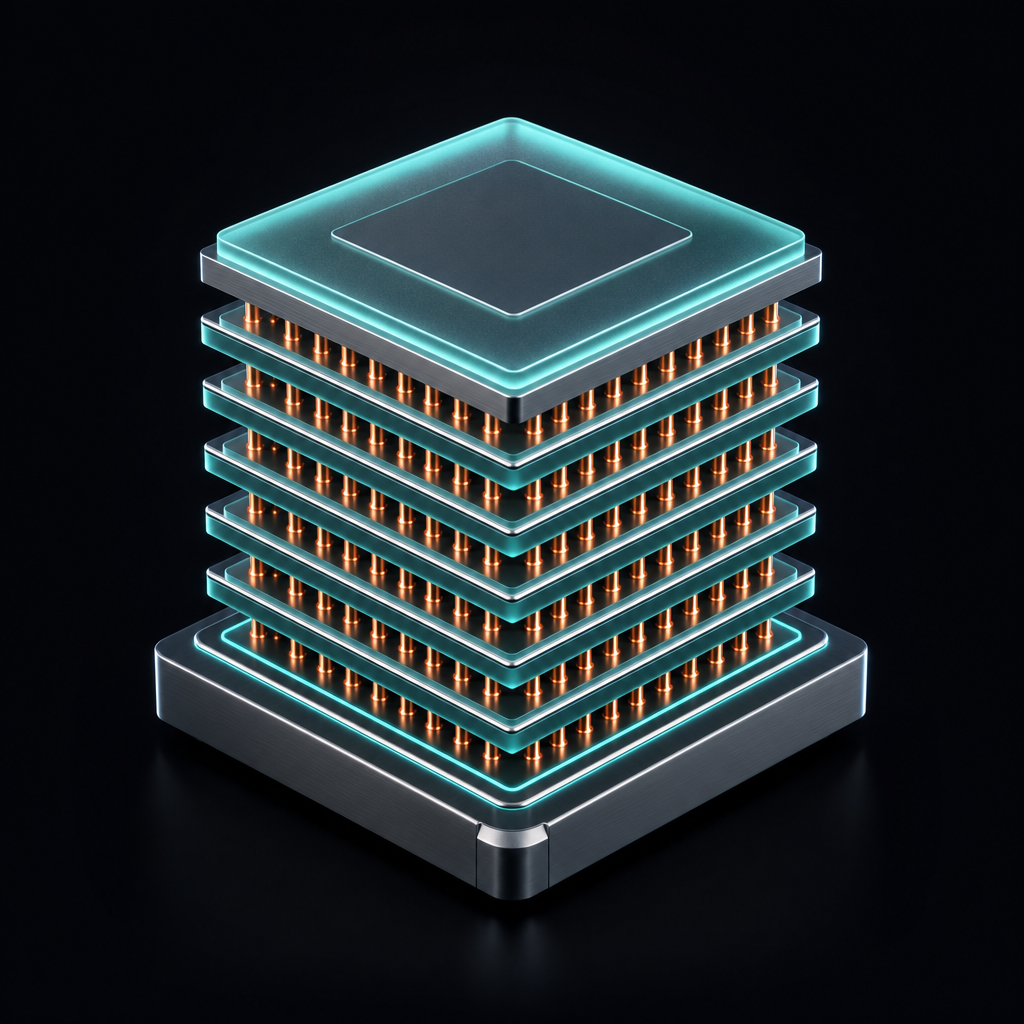
▶ See it in 3D The Memory Stack region
HBM is the famous part; the price of ordinary DRAM is what moves SK Hynix, Samsung and Micron's shares. In 2026 it spiked — because HBM is eating the same wafers. This is the tape to watch.
HBM gets the attention, but ordinary memory prices still drive the memory companies' earnings. Those prices are spiking now, because HBM and ordinary DRAM compete for the same factories and HBM is winning. New factories arrive mainly in 2027–28, so the squeeze could last until then. That is the whole cycle.
What it is
HBM gets the headlines, but the memory makers' share prices move on the DRAM cycle — the swing in commodity memory prices that is now the largest in a decade. In 2026 it flipped to an outright shortage: server DRAM contracts up ~90% in a quarter, PC DRAM more than doubling, legacy DDR4 at record highs. The cause is HBM itself: it eats the wafers, and new capacity takes years.
The business
This is the number that decides SK Hynix, Samsung and Micron's earnings, and it is far bigger than HBM revenue: TrendForce expects conventional DDR5 profitability in 2026 to surpass HBM3E's. The bull case is that HBM crowd-out keeps commodity prices elevated through 2027; the bear case is that CXMT (already ~10% of global DRAM revenue) and the 2027–28 fab wave bring the classic memory bust. Watch contract-price direction, not HBM share, if you own the memory names.
Bottleneck severity
A capacity chokepoint with a twist: the same fabs make HBM and commodity DRAM, and every HBM wafer uses ~3× the silicon of a DDR wafer. As HBM takes 18% → 22% → 30% of DRAM wafer starts (2025 → 2027), conventional memory gets starved — and new fabs (SK Hynix Yongin May 2027, Samsung P5 late 2027, Micron Idaho 2027–28) arrive too late to relieve it. That is why 2027 is being called the tightest supply year in the industry's history.
Who makes it
SK Hynix000660.KS
#1 HBM maker (~62% share). Qualified HBM4 at NVIDIA first and holds an estimated 60–70% of Rubin's HBM4 allocation, with a TSMC-made logic base die. Sold out through 2027; its CEO calls 2027 potentially the tightest supply year the industry has seen. The bellwether of the whole cycle.
Samsung005930.KS
#2 in HBM. Began HBM4 mass production in Feb 2026 and is qualified at NVIDIA — with an in-house 4nm base die, the one turnkey memory+logic+packaging offer. P5 Pyeongtaek pulled forward to late 2027; ~$73B cumulative capex through 2026.
MicronMU
#3 HBM, the only US-HQ DRAM maker. Qualified on Rubin HBM4; sold out through 2027 and meeting only ~50–65% of what customers ask for. New Idaho capacity doesn't land until 2027–28 — so the squeeze is structural, not seasonal.
CXMT688825.SH
China's only scaled DRAM maker: ~10% of global DRAM revenue in Q2 2026, ~300k wafers/month heading for 350k, and a 466% first-day pop on its July 2026 STAR listing. But its IPO capex names no HBM line; HBM3 is a 2026–27 target and HBM3E not before 2027 — years behind on the part AI actually needs.
Lam ResearchLRCX
Etch & deposition tools for HBM's through-silicon vias. HBM tool revenue +50% YoY — equipment ordered today = chips in 12–24 months.
Applied MaterialsAMAT
Deposition/etch + packaging tools used across HBM TSV and advanced packaging.
Metrics that move this layer
- DRAM contract price, QoQTrendForce quarterly — the single most important number for the memory stocks
- HBM share of DRAM wafersthe crowd-out ratio: 22% end-2026 → 30% end-2027
- Inventory daysSamsung / SK Hynix fell below 10 days in Sept 2026
- Fab timingYongin May-27, P5 late-27, Idaho 27–28 — when relief lands